
Safeguarding safe use through usability engineering
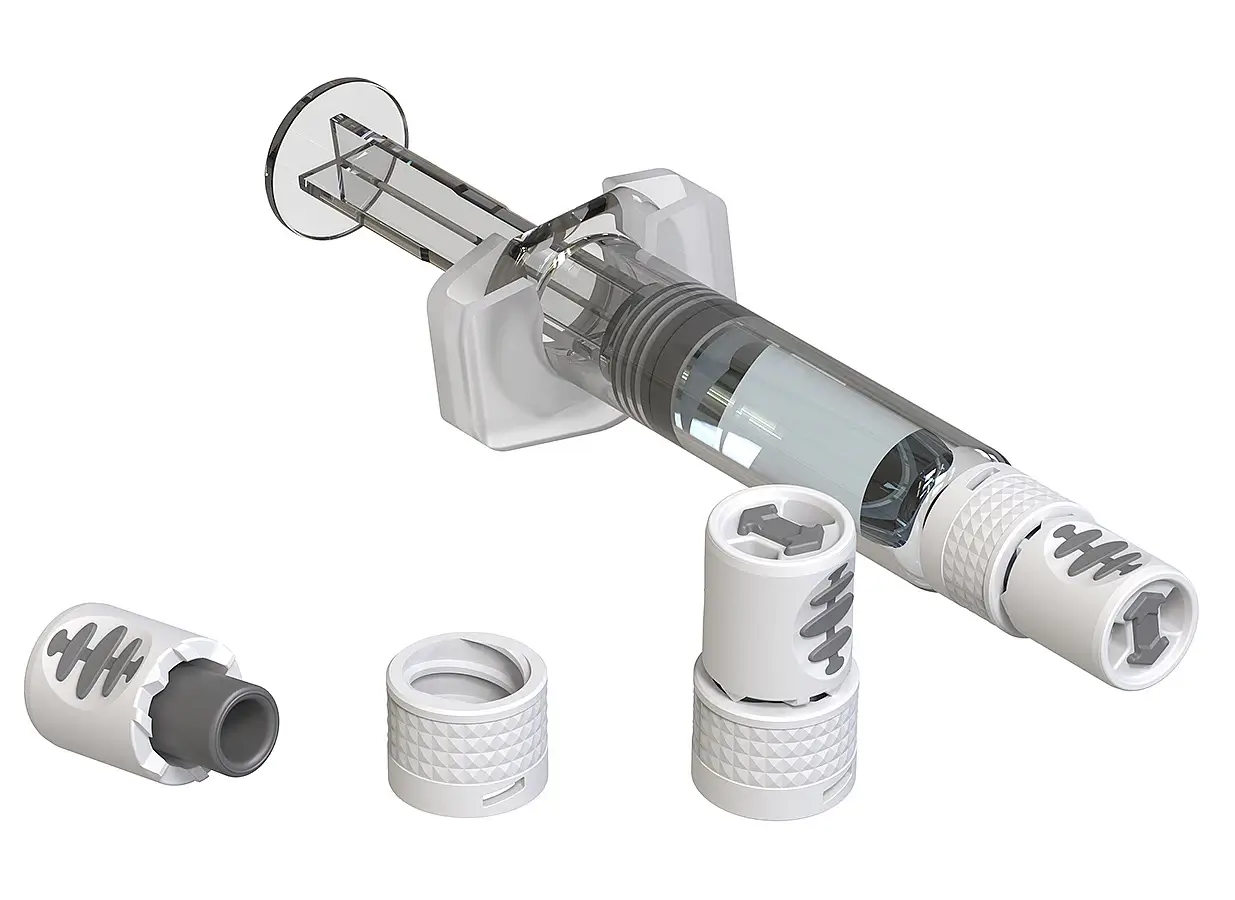
With V‑OVS® next, Vetter Pharma-Fertigung GmbH & Co. KG, one of the world’s leading contract development and manufacturing organizations (CDMO), developed a new generation of tamper-evident closures for prefilled glass syringes.
Through a formative usability evaluation, the product must be intuitive, safe and efficient to use both in clinical application and in the homecare setting. As a partner for user-centered product development USE‑Ing. supported development in accordance with IEC 62366‑1 and contributed to meeting the requirements of the MDR (Medical Device Regulation). In addition to the formative usability evaluation, a systematic use-related risk analysis (URRA) was carried out to identify and assess potential use-related risks early.
The result: an innovative and safe product solution in which identified use risks were reduced in a targeted way and regulatory requirements were met. At the center of the formative evaluation and the use-related risk analysis carried out by USE‑Ing. was one key question:
Does the new design support users reliably, or does its use create new, potentially safety-critical risks?
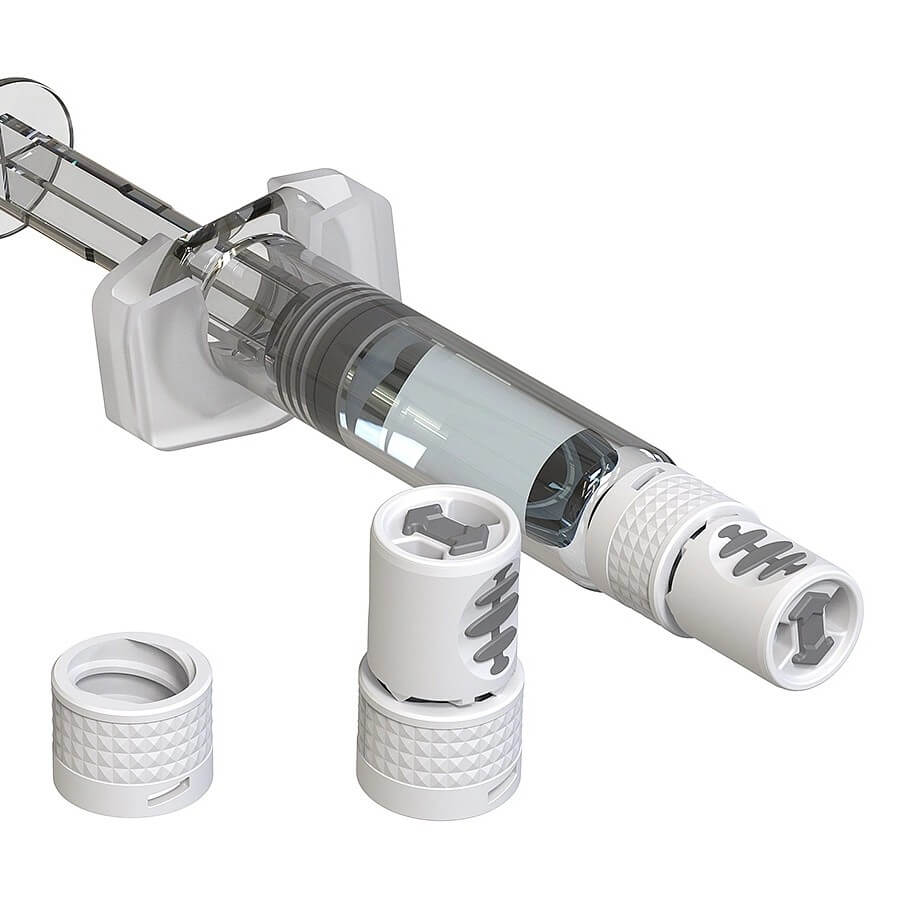
The V‑OVS® next syringe closure system
The V‑OVS® next from Vetter is a newly developed Luer lock syringe closure system for sterile injectables.
The system is a further development of the established V‑OVS® and was optimized specifically for intuitive, safe and efficient handling.
The product is used both in clinical application and in the homecare setting, which addresses different user groups with varying levels of experience and competence.
The combination of mechanical functionality, safety-critical use steps and different contexts of use places high demands on the usability of the product.
Especially when handling sterile injection systems, even small operating errors can potentially have safety-relevant consequences.
It is therefore essential that the design takes possible use errors into account early and minimizes them in a targeted way.
Formative usability evaluation: two target groups, two contexts of use
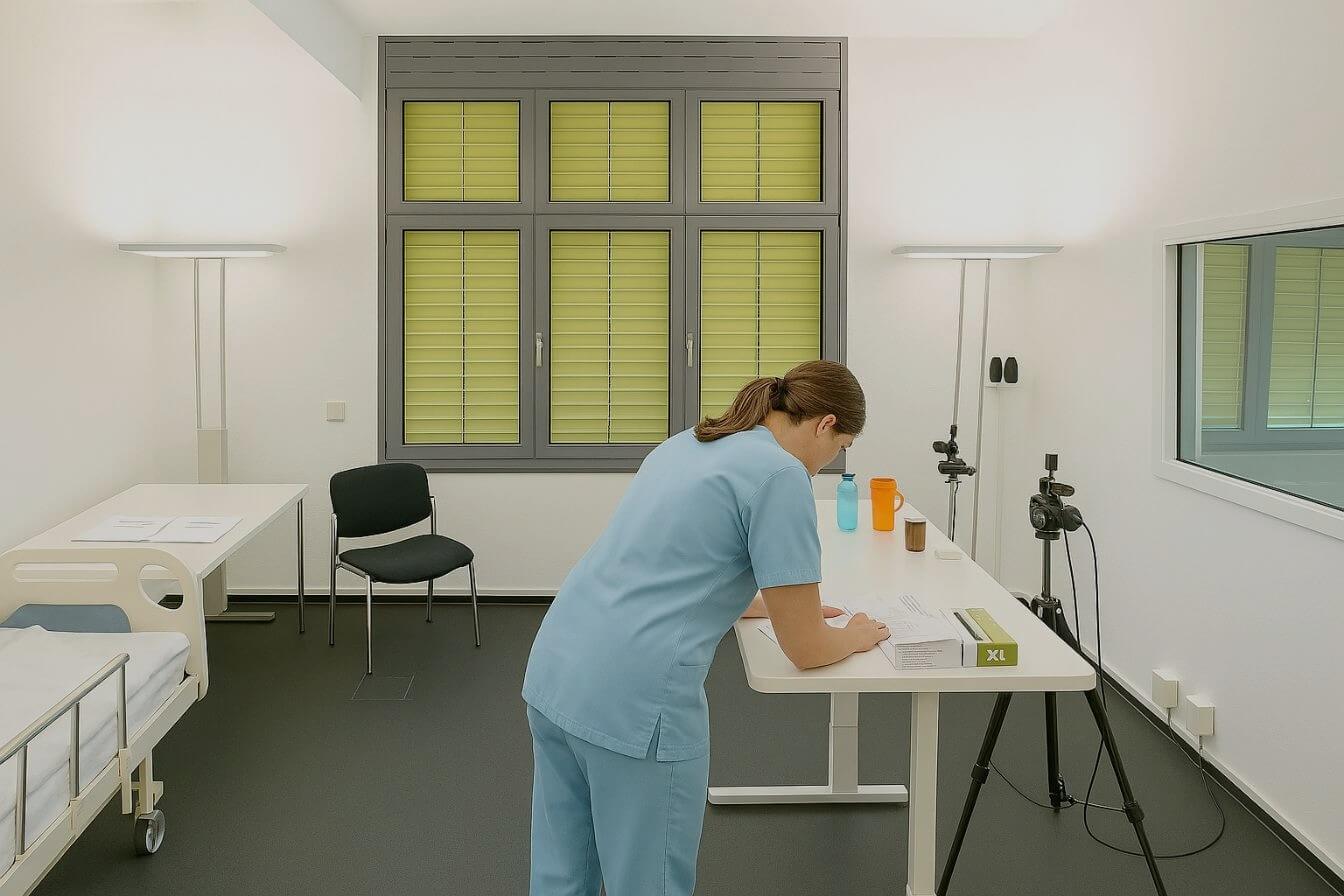
To reflect the real use of V‑OVS® next, USE‑Ing. carried out two studies with different user groups.
In the clinical environment, the focus was on healthcare professionals and routine workflows.
The investigation covered in particular the medication room, working under time pressure and under sterile conditions and the execution of routine handling steps.
The participants tested:
- the intuitive and deliberate opening
- the comparison with the predecessor design
- and the complete assembly of the needle
In a realistic homecare environment, the focus was on use by lay users.
The entire context of use was considered here, from removing the syringe from the blister pack to preparing the injection.
This included in particular:
- opening the closure
- assembling the syringe and plunger rod
In addition, the comprehensibility of the quick guide and differences in the motor skills of users were analyzed specifically. The insights gained served as the basis for the systematic identification of critical use scenarios in the subsequent URRA.
Use-related risk analysis and hazard-related use scenarios
Building on the results of the formative evaluation, the use-related risk analysis (URRA) was carried out. This use-related risk analysis served the systematic identification of potential use-related risks that can arise from using the product.
The focus was on the central question:
Where can the user interface lead to errors in real use, and how can these be prevented reliably?
Several methodological approaches were combined to answer it:
- the analysis of complaints and adverse events from the predecessor product
- a targeted UI inspection
- and PCA task analyses for the structured review of critical use steps
This made it possible to identify and assess use errors systematically.
In subsequent interdisciplinary workshops, the different perspectives were brought together and translated into the hazard-related use scenarios required by the standards.
These formed the basis for:
- the derivation of risk control measures
- their implementation in accordance with IEC 62366‑1 and ISO 14971
- and the preparation for the summative validation
The result for V‑OVS® next: a standards-compliant and robust basis for decisions that not only makes risks transparent but also contributes specifically to design optimization.
At the same time, a sound basis was created for the summative validation and for a market-ready, intuitive application, supported by precise, actionable recommendations that measurably accelerate development and approval.
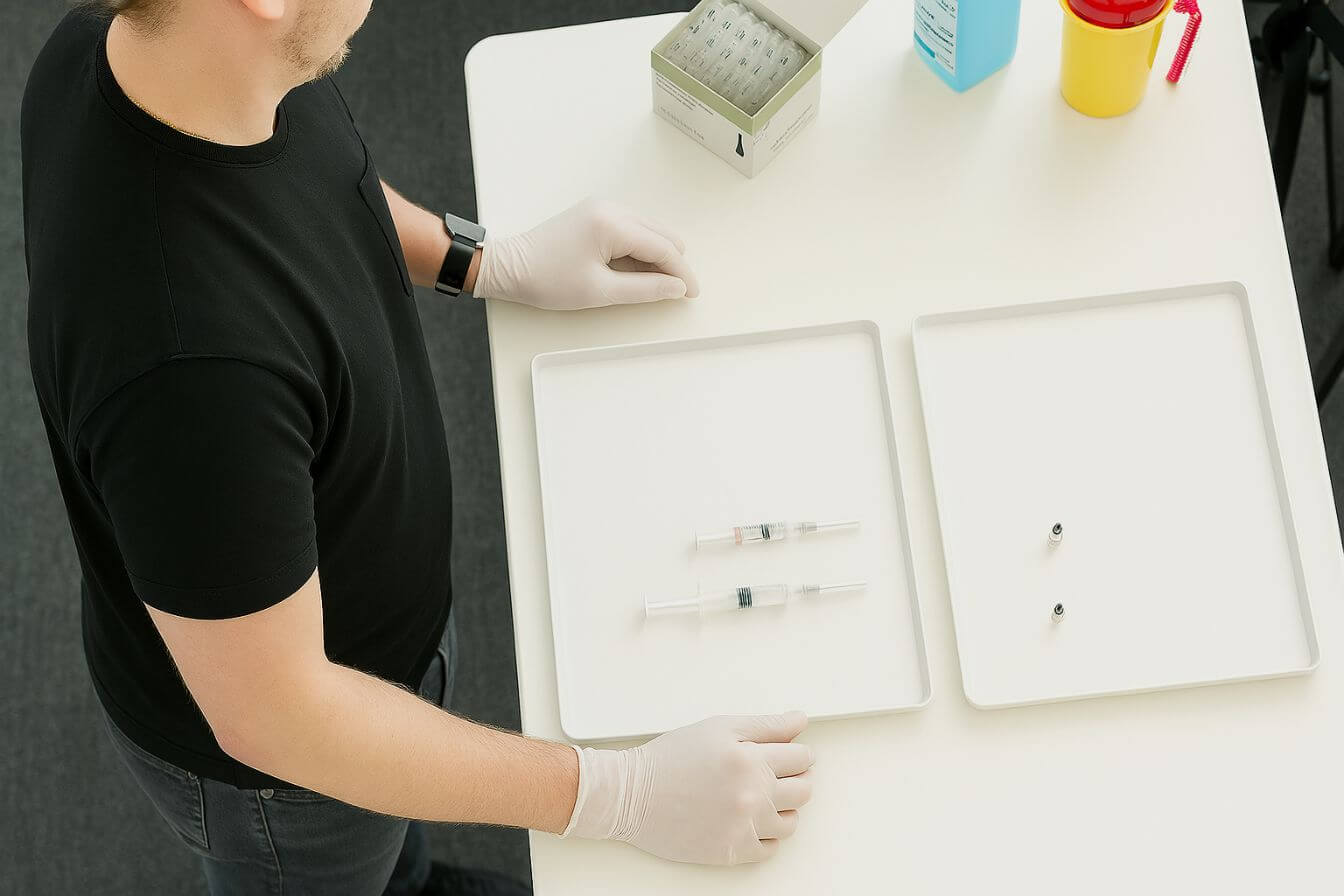
The project around V‑OVS® next shows how effectively structured and standards-compliant usability engineering supports the development of medical devices.
Through formative usability evaluation and use-related risk analysis (URRA), critical use scenarios were identified early, assessed in a structured way and translated into concrete, actionable recommendations.
This created a robust basis for decisions on design optimizations, risk management and the preparation of further validation steps.
Key results and impact of the usability evaluation
- Identification of critical use errors in key use steps
- Systematic assessment and prioritization of use risks
- Targeted design optimizations to reduce use-related risks
- Reliable creation of a standards-compliant URRA in accordance with IEC 62366 and ISO 14971
- Safe preparation of the summative validation
The project shows how formative usability engineering and use-related risk analysis (URRA) help to identify critical use scenarios early and reduce them in a targeted way.
The results enabled well-founded design decisions and improved both regulatory assurance and planning certainty in the development process.
Would you like to develop your medical devices safely and in a regulatory-efficient way?