Ergonomic Analysis
of Products

We analyze ergonomics objectively, with measurement data instead of assumptions

In many products, ergonomics is not evaluated in a verifiable way

Decisions are often based on assumptions instead of data

This is particularly critical for products with high use or safety-relevant application. Ergonomic decisions are often based on assumptions, not on data. As a result, risks only become visible in use.
Robust foundations for product decisions and clear arguments towards stakeholders are missing. Ergonomic analyses create an objective basis here for evaluating use, strain and interaction.

Evaluating ergonomics objectively

We combine measurement data, expert assessment and medical classification for an objective ergonomics analysis.

Evaluating ergonomics objectively with measurement data and expert analysis

Classic ergonomics assessments often do not deliver reliable results.

Typical weaknesses of classic approaches:

Our approach combines measurement data, expert assessment and medical classification into an objective and traceable ergonomics analysis. Regular ergonomics analyses across the entire product life cycle create the continuous data basis for design decisions.
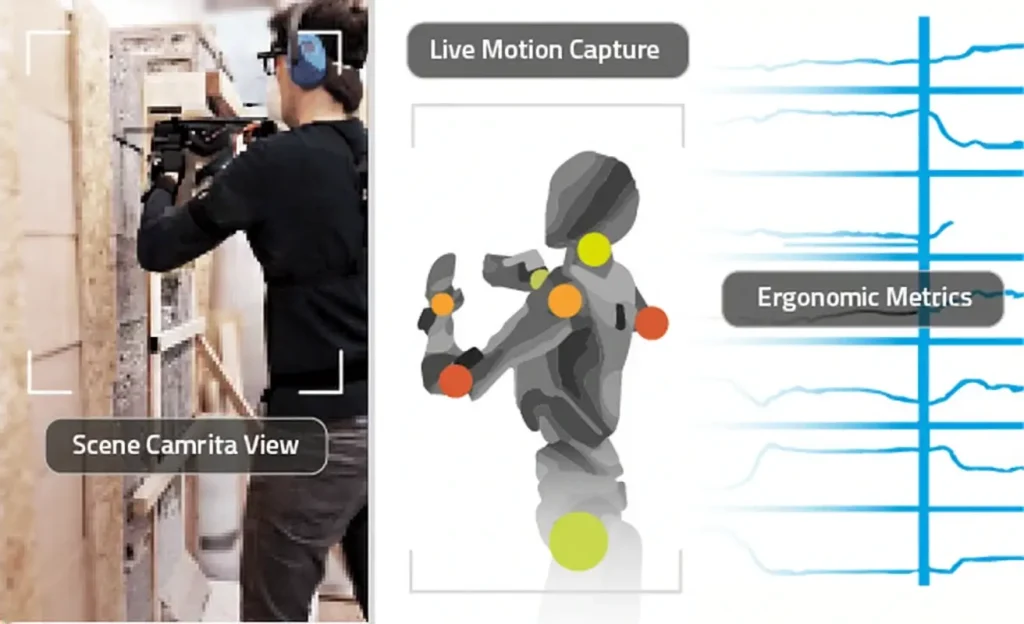
Measurement-based analysis

Measurement of movement, posture and strain as an objective data basis for evaluating ergonomics.

Expert assessment

Classification of the measurement results in the real context of use through structured expert assessment.

Medical classification

Evaluation of the ergonomic effects from a physiological and clinical perspective.
Only the combination of these perspectives makes ergonomics measurable, traceable and robust.

Measuring and validating ergonomics objectively

Ergonomics often remains an assessment without robust evidence.
We make ergonomic quality measurable and deliver robust results for development, documentation and regulation..

VALIDATION OF REQUIREMENTS

Verification of whether ergonomic requirements are actually met in real use.

ROBUST DECISION FOUNDATIONS

Robust decision foundations for product decisions, traceable internally and externally.

SUBSTANTIATING ERGONOMICS CLAIMS

Evidence of ergonomic quality for documentation, marketing and regulatory requirements.
Ergonomics thus becomes not only plausible, but verifiable.
ergonomic evaluation

Analyzing ergonomics in a measurable way: methods of ergonomic evaluation

Depending on the product and the question, we deploy the suitable analysis methods in a targeted way.

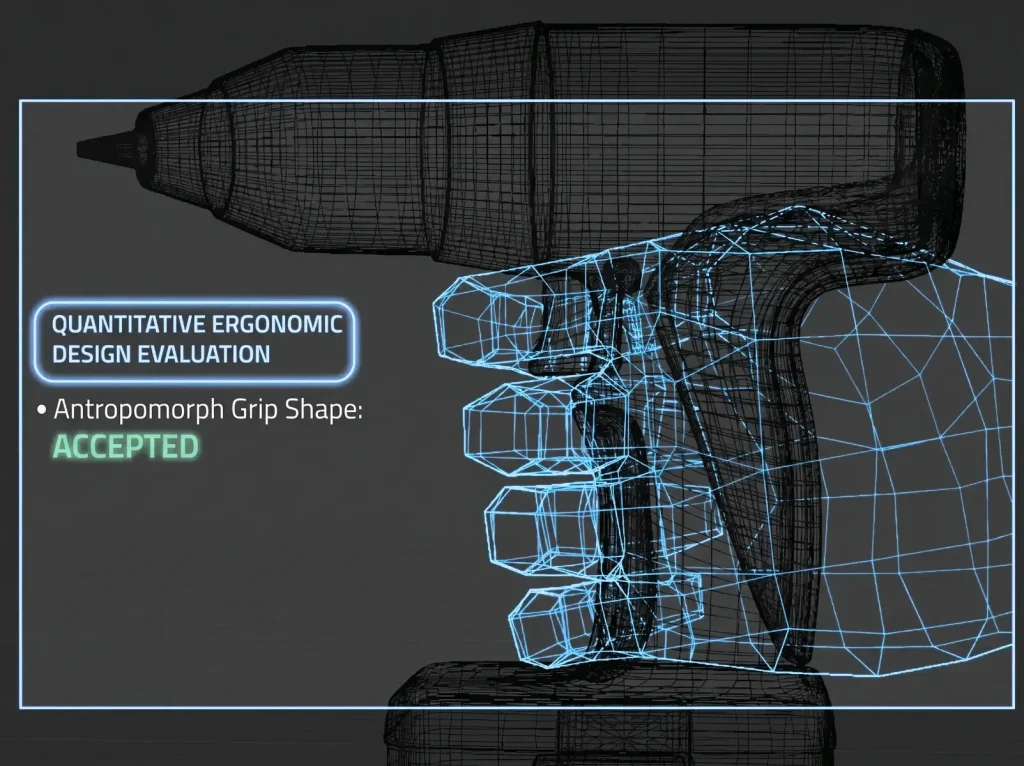
Anthropometry & reach envelopes

Analysis of reach envelopes, operating heights and body positions based on anthropometric data and real use scenarios.
Optimization of operating concepts and reduction of ergonomic overload. For hand length alone, the span between the 5th percentile of small users and the 95th percentile of large users is around 45 mm (ANSUR II), a measure that a single grip design does not cover.

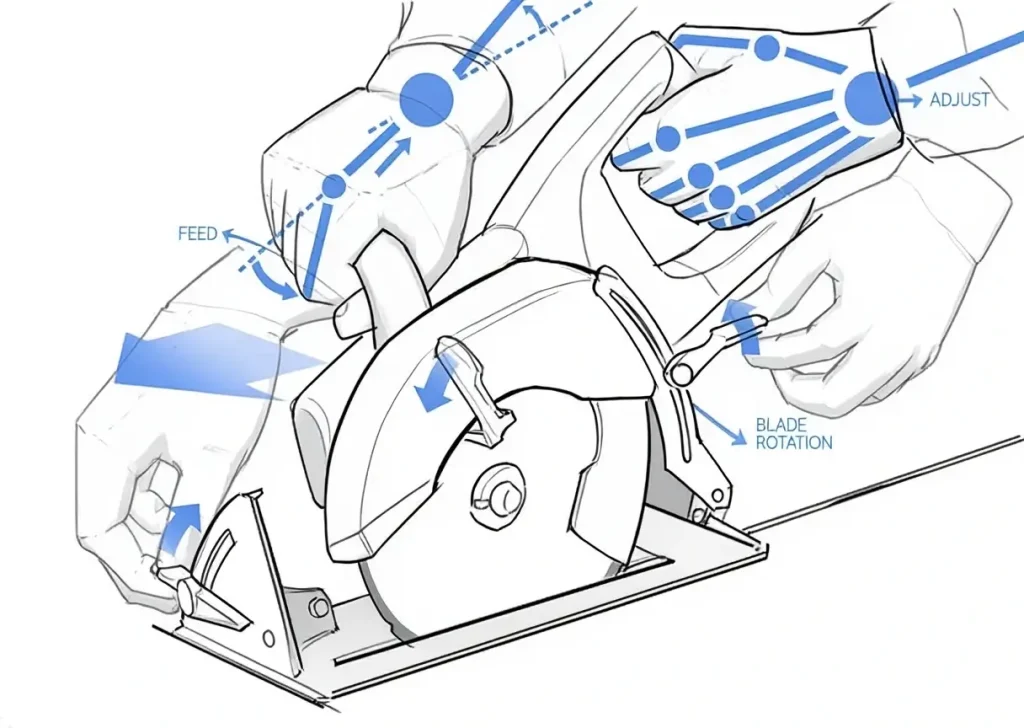
Posture & movement analysis

Analysis of movement sequences and use patterns to detect strain and inefficient interactions.

Identification of critical movements and optimization of ergonomic workflows.

Physical strain & fatigue

Measurement of muscle activity and strain to evaluate ergonomic load over time.
Evidence of overload and derivation of concrete ergonomic improvements.

Physical strain & fatigue

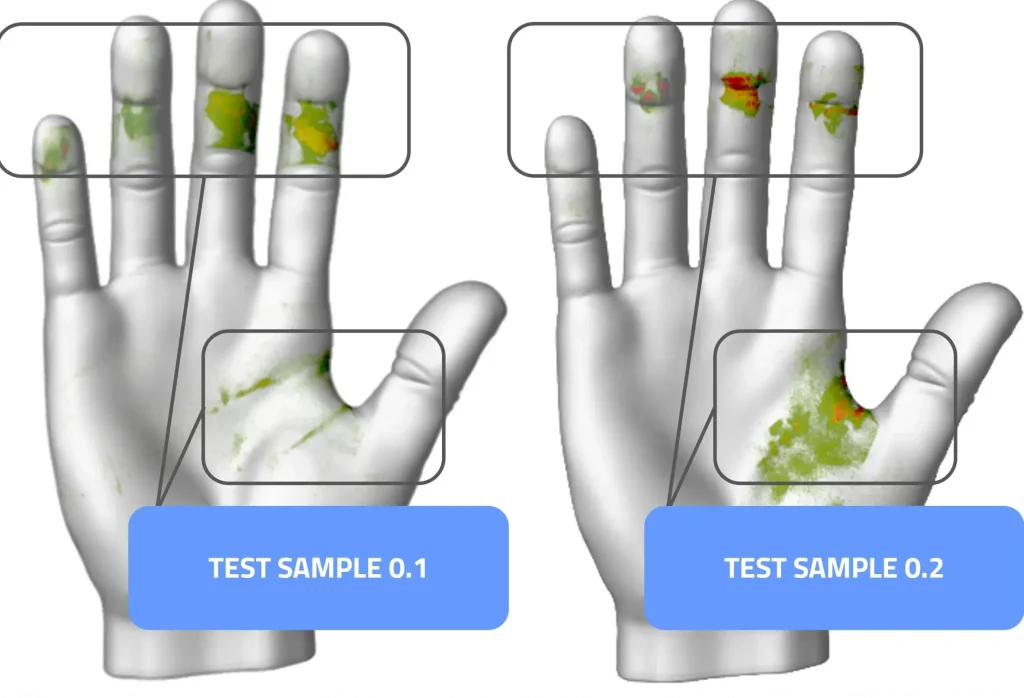
Analysis of pressure distributions and contact surfaces in the interaction between user and product.
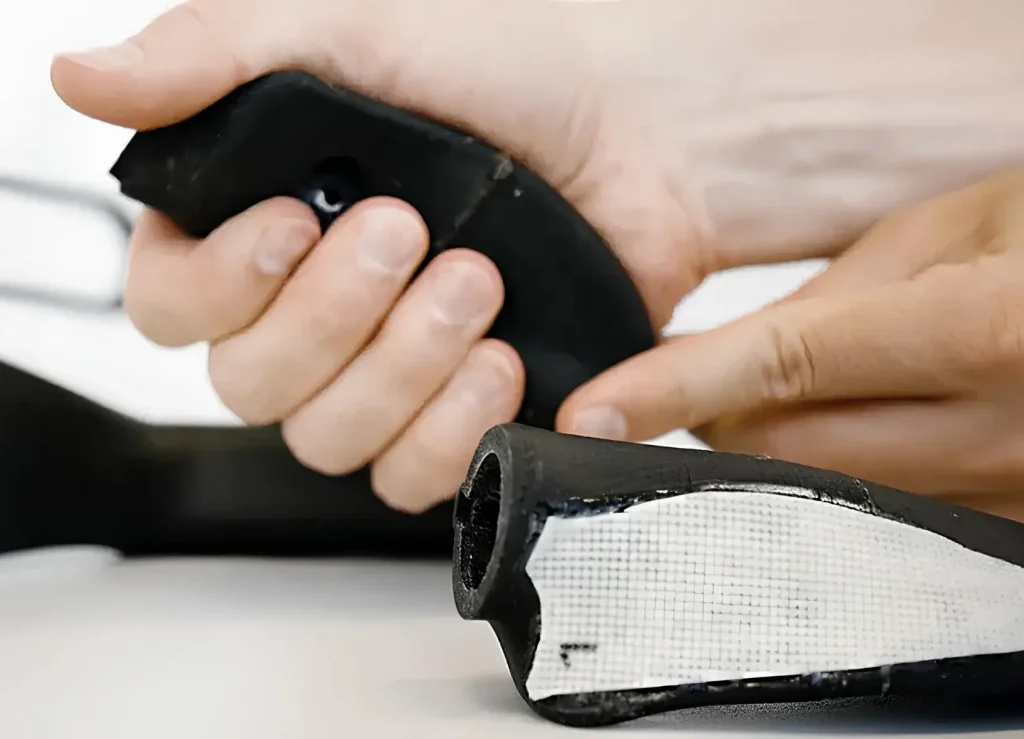
Optimization of comfort, stability and load distribution.

Ergonomic design & product development

Integration of anthropometric target values and ergonomic design criteria into concept and prototype before series development begins.

Ergonomic design takes body dimensions and operating forces into account before the first drawing is made. More on the underlying values in the term grip force and operating forces.

The methods are selected project-specifically, matching product, use and question.

Ergonomics analysis on a normative and scientific basis

Our ergonomic analyses are based on established standards and current scientific findings.

Selection and application are project-specific, aligned with product, use and regulatory requirements.

Relevant standards

Depending on the application, we take the relevant standards into account:

Integration into professional and regulatory networks

Our work is embedded in relevant professional and standardization networks:

This creates a reliable basis for development, documentation and approval.

Analyzing ergonomics objectively: results that enable decisions

Our ergonomic analysis makes use, strain and interaction measurable.
This produces robust results for development, evaluation and communication.

Validation of ergonomic requirements

Verification of whether requirements are actually met in real use.

Sound decision foundations

Objective data and evaluations for safe and traceable product decisions.

Substantiating ergonomics claims

Evidence of ergonomic quality for marketing, documentation and regulatory requirements.

Identifying risks early

Identification of ergonomic risks before they cause problems in use.

We make ergonomics not just plausible but a robust basis for decisions.

Ergonomic analysis in different application contexts

Ergonomic requirements differ depending on product, use and context of use.

Our analysis approaches can be transferred specifically to different areas of application, from safety-critical applications to technical products.

Medical technology

Evaluation of ergonomic use in clinical and medical environments
Focus: patient safety, clinical application and regulatory safeguarding

Industry & mechanical engineering

Analysis of workplaces and interactions in industrial environments

Focus: occupational safety, efficiency and strain reduction

Industry & mechanical engineering

Ergonomic evaluation of technical products with intensive manual interaction
Focus: user-friendliness, efficiency and product quality
In this way, less regulated products also benefit from methods from safety-critical and clinical applications.
Marcus Jenke Portrait

Dr. Marcus Jenke

Ergonomics & Human Factors Engineer

100+ projects in usability engineering and ergonomic analysis, from context analyses to validation of complex products.

Ergonomic analysis for your product: data-based and traceable

We analyze your product systematically, from the first assessment to robust results for development, decision-making and evidence.

4.6/5

Stars from customer reviews | based on projects in medical technology, industry
and technical product development

Further insights into ergonomic analysis

Measurable ergonomics in practice and methodological foundations from the knowledge platform.

Would you like to take part in ergonomics studies yourself?
We are looking for people with very different body dimensions, strengths and ranges of movement. This is exactly what decides whether a product works in everyday life.
Become a test participant
Ergonomics analysis

Frequently asked questions

In this FAQ we answer key questions about ergonomic analysis, measurement methods, standards and practical application in product development.

An ergonomic analysis makes particular sense
when products are used intensively, physical strain occurs
or ergonomic quality needs to be demonstrated,
e.g. in medical technology as part of the usability engineering process, industrial applications or complex operating contexts.

Depending on the question, different methods are used, e.g. movement analyses (motion tracking), EMG measurements to evaluate muscle activity, anthropometric analyses or pressure measurements (pressure mapping). The selection is made in a targeted way depending on product, use and objective.
While usability focuses on operability and user experience, the focus of ergonomic analysis is on physical strain, movement, posture and physical interaction. Both areas are closely connected but address different aspects of use.
Yes. By using suitable measurement methods and structured analyses, ergonomic requirements can be evaluated and substantiated objectively. This enables robust statements for product decisions, documentation and marketing.

Ergonomic analyses are based on established standards from the series
DIN EN ISO 9241 or DIN EN ISO 6385.

These serve as a basis for structured evaluations and
ensure that results are traceable and comparable.


In many cases yes, especially in regulated areas such as medical technology. Here, ergonomic analyses can be part of risk assessments or usability engineering processes. Even outside regulated industries, documented results are an important part of well-founded product decisions.
Ergonomic risks are identified through the combination of measurement data, expert assessments and use scenarios. In this way, e.g. unfavorable movements, high strain or inefficient interactions can be detected systematically.
Ergonomic analyses are relevant for all products with intensive use, e.g.:
They are particularly important wherever incorrect operation or strain poses risks.
The effort depends strongly on the question. From a first assessment to detailed measurement analyses, different approaches are possible. The goal is always an efficient and problem-oriented investigation.
Typical results are:
The results are documented in a traceable way and are relevant for decisions.
The collaboration usually begins with a non-binding assessment of the initial situation. On this basis, suitable analysis methods are defined and implemented in a targeted way, depending on product, use and objective.
Ergonomics can be taken into account most effectively before series development, for example by defining ergonomic target values for handles and controls (more on this in the term grip force and operating forces) and early evaluation of prototypes based on percentile ranges. This allows corrections to be made in the design before tools or series production are fixed.
The term “ergonomic” is not protected and is often used without robust evidence. Only a documented ergonomic analysis, with defined target values, traceable methodology and substantiated results, turns the advertising claim into a verified property (more on this in the term ergonomics as an advertising claim).