


Safe mobility through usability engineering of an electric rollator
With ello VOSS Health Care combines the familiar use of a rollator with an electric drive assist. The additional support makes everyday mobility easier but also increases the demands on safe interaction between user and system.
Older people in particular must be able to understand at all times when the drive assist is active, how it responds and how it can be controlled. Misinterpretations can directly affect safety and trust in the product.
As part of the project, USE-Ing. carried out user research, use-related risk analyses, formative usability evaluations and the summative validation in accordance with the regulatory requirements of the MDR and IEC 62366-1.
Development of a user-centered operating concept
A key success factor in the usability engineering of an electric rollator such as the ello was the safe and understandable interaction between user and electric drive assist. Unlike with a classic rollator, users must not only master mechanical functions but also understand and control the behavior of an active support system.
Especially for older people and people with reduced mobility, it is essential that the electric support appears comprehensible, predictable and trustworthy at all times. The interaction must not create additional uncertainty but must support the feeling of control and safety.
Against this background, the entire operating concept was aligned consistently with the requirements of the target group. Besides the user interface, the focus was in particular on the design of the handles, the arrangement and reachability of the controls, the interaction with the battery system and the operation of the folding mechanism. All relevant operating sequences were designed so that they are intuitively understandable and fit as seamlessly as possible into the familiar usage patterns of a classic rollator.
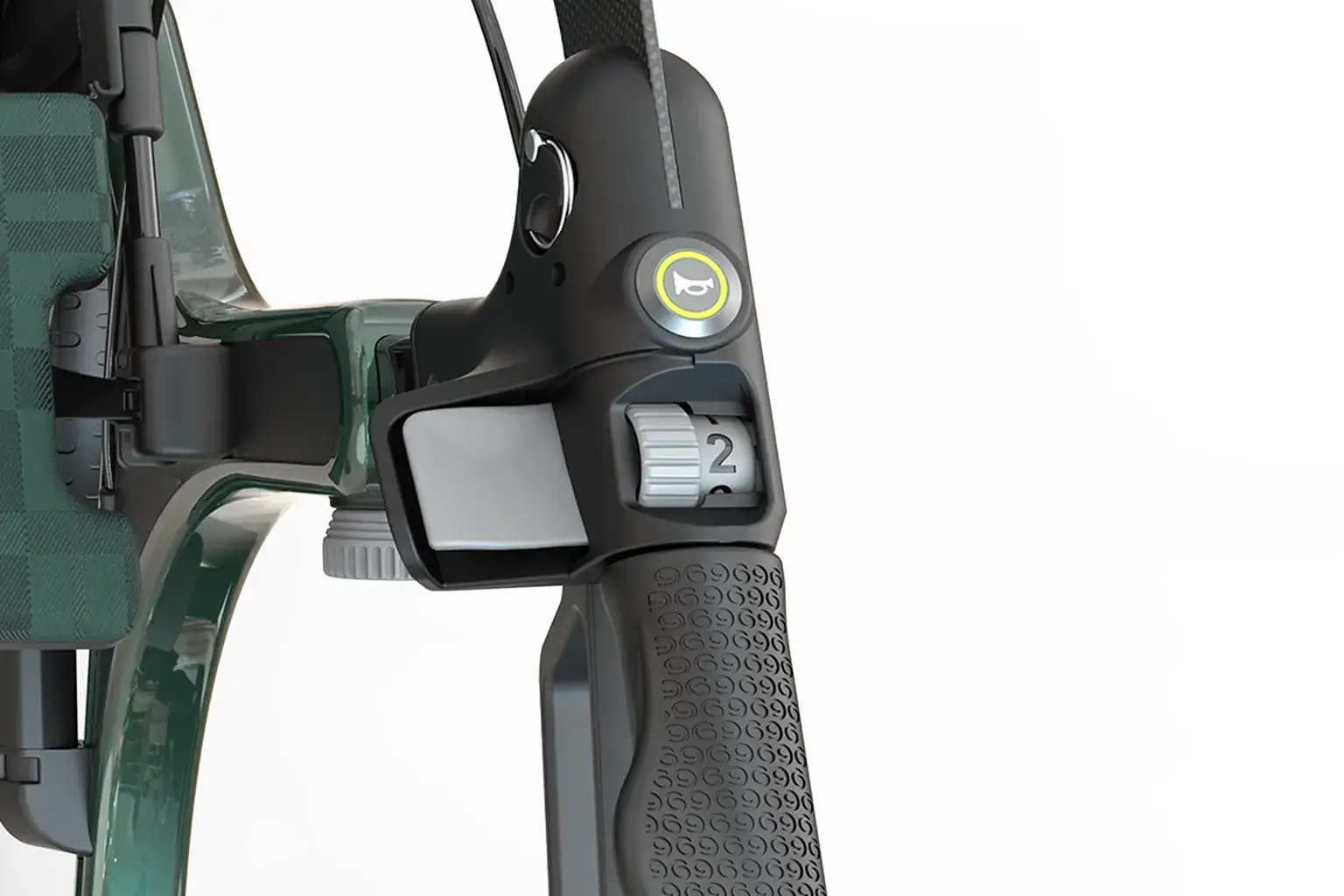
Early user research provided insights into contexts of use, expectations and mental models of the target group. Through the consistent use of user-centered design, potential barriers to use could be recognized and addressed early. This helped to improve the usability of the product and at the same time to reduce safety-relevant operating errors.
The result is an interaction and operating concept that combines the advantages of an electric drive assist with a familiar and easily understandable user experience. This enables safe use in everyday life that is optimized for the specific user group.
Taking user requirements into account
The intended user group of the ello consists mainly of older people and people with reduced mobility. Physical, sensory and cognitive abilities of users were thus at the center of the product design from the start.
With an electric drive assist in particular, these factors influence not only operating comfort but also the safe and effective use of the system. Users must be able to reach controls reliably, perceive system states correctly and carry out operating actions safely even with age-related limitations.
For the ergonomic design of the product, anthropometric data, established human factors engineering methods and insights from user research were used. This made it possible to tailor grip areas, operating heights, reach and interaction sequences specifically to the characteristics of the target group.
The focus was on the following, among other things:
- Operating forces and the effort required
- Reachability and graspability of controls
- Haptic perceptibility of controls
- Fine motor skills of users
- Visual acuity and contrast perception
- Legibility of information and font sizes
- Attention, information processing and cognitive load
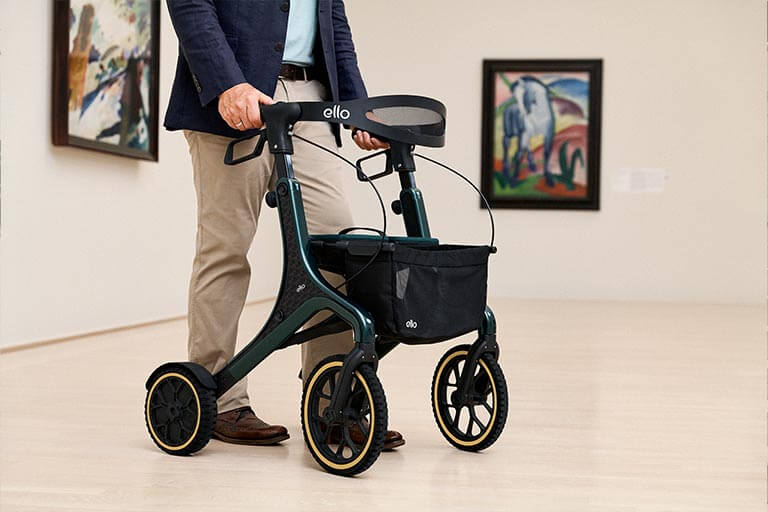
Taking these requirements into account helped to reduce potential barriers to use early and to improve the usability of the product for the actual users systematically. With the interaction with the electric drive assist in particular, this was decisive for minimizing misunderstandings, operating errors and the resulting use risks.
On this basis, we were able to implement an ergonomically sound product design of the electric rollator that takes the abilities and limitations of the target group into account and supports safe use in everyday life.
Usability engineering throughout the entire development process
The safe and effective use of the ello was safeguarded systematically throughout the entire development process. Because the electric drive assist has a direct influence on usage behavior and on how the system is perceived, the expectations, needs and abilities of users were in focus already in early development phases.
Early user studies provided valuable insights into contexts of use, mental models and potential challenges in interacting with the system. These insights fed continuously into the further development of the interaction and operating concept.
In the further course of the project, critical use scenarios were investigated in formative usability evaluations. This made it possible to recognize potential usability problems and safety-relevant barriers to use early and to address them in a targeted way.
In addition, use-related risk analyses supported the systematic identification of use risks. Particular attention was paid to the interaction with the electric drive assist and to situations in which operating errors could impair the safety of users. The insights gained fed directly into risk control and further product design.
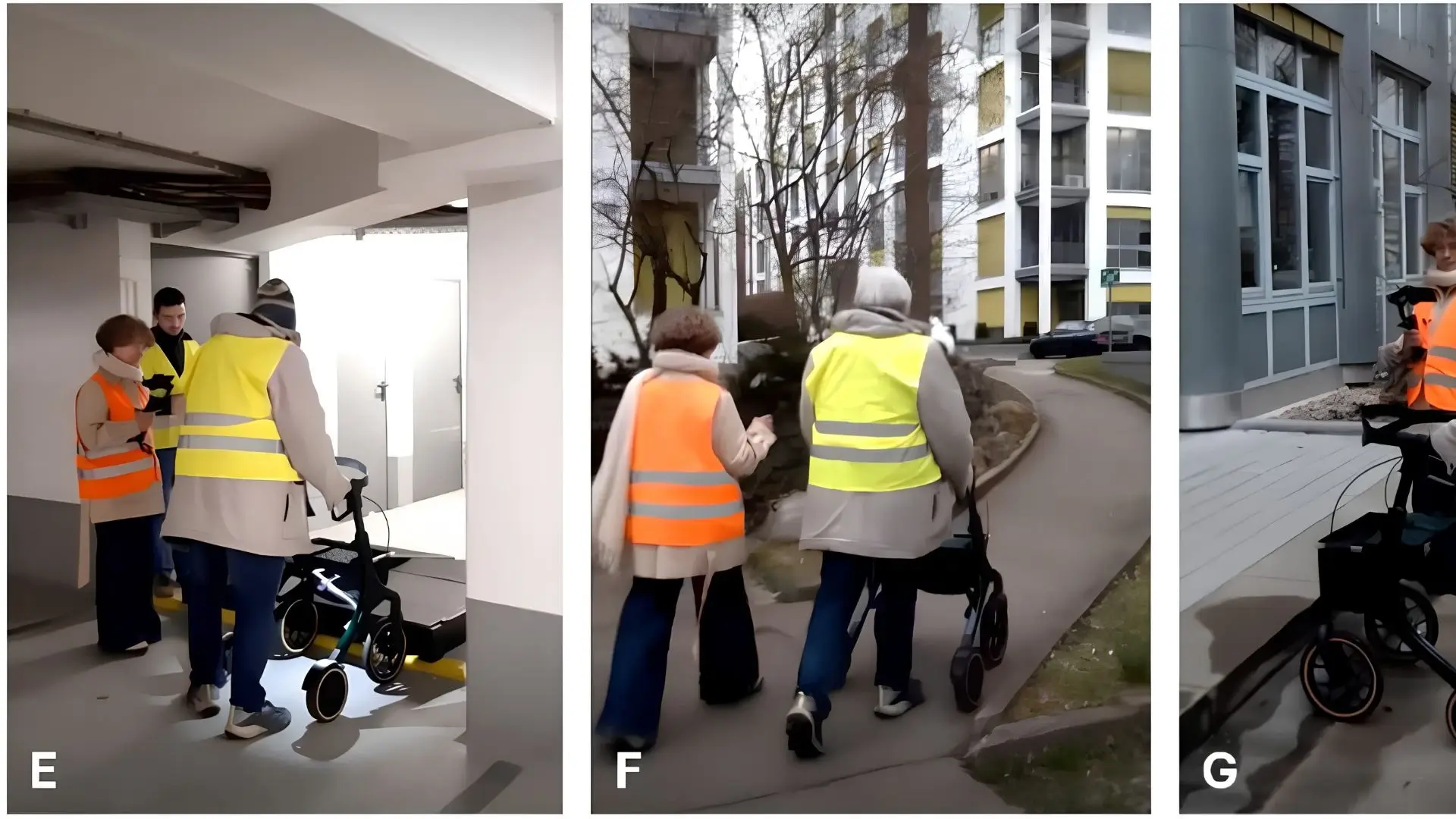
The final step was the summative validation in accordance with IEC 62366-1, which demonstrated the usability of the electric rollator under realistic conditions of use. This created a robust basis for regulatory assurance under the MDR and for the safe market launch of the product.
Key results and impact of the usability engineering process
- Safe and intuitively understandable use of the electric drive assist
- High user acceptance in the intended target group
- Reduction of safety-critical use risks
- Ergonomic adaptation to age-related limitations
- Improved perceptibility of system states and operating actions
- Demonstration of usability in accordance with IEC 62366-1
- Support for MDR-compliant product development
The application of human factors engineering and usability engineering created the basis for safe, understandable and accepted use of the electric drive assist. The consistent consideration of the requirements of older users and the early involvement of real users helped to reduce critical use risks and to safeguard the usability of the system in a targeted way.
The close interlinking of user research, ergonomic product design, risk management and regulatory assurance created a robust basis for the safe market launch of an innovative mobility assistance system.
Would you like to develop your medical devices safely and in a regulatory-efficient way?